
’Van Rossem’ incoming
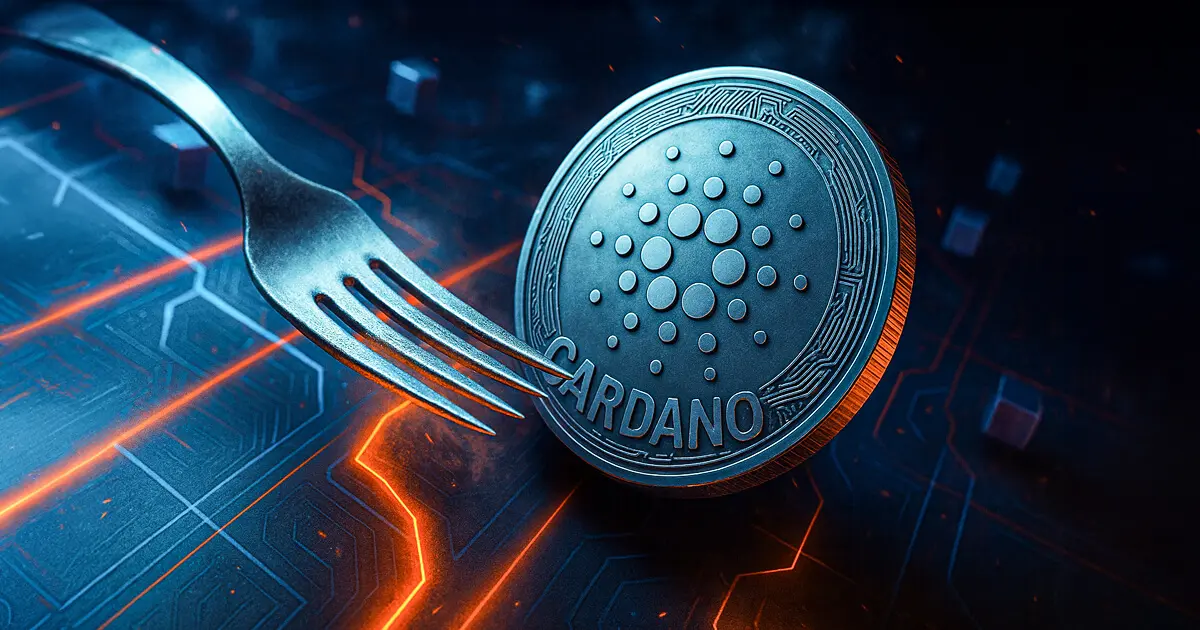
A new hard fork is on the horizon for Proof-of-Stake (PoS) blockchain platform Cardano.
Protocol Version 11, which increasingly looks like it will be known as the “Van Rossem Hard Fork” as a tribute to the network’s late governance developer Max van Rossem, is expected to boost the platform significantly.
The improvements include increased storage limits for transactions and blocks to make the development of smart contacts easier, enhanced security for mechanism keys, and optimised ledger consistency.
The pending “Van Rossem Hard Fork” follows Cardano’s Plomin Hard Fork in 2025.
Plomin allows holders of the platform’s native ADA token to transfer voting power to Delegated Representatives (DReps).
DReps are ADA holders who register on-chain to enable other members of the community to delegate their voting power to them so they can vote on their behalf.
The Cardano to USD price may be facing pressure from broader market conditions, but Protocol Version 11 is clear evidence that the platform is pushing on to achieve its objective of absolute decentralisation
As is the case with the upcoming hard fork, Plomin is part of Cardano’s final-stage Voltaire development era aimed at introducing effective on-chain governance systems.
Staying put in ledger era
They will take place within Cardano’s current Conway ledger era, thereby eliminating the need for a full transition.
The platform’s ledger eras differ from its development eras in that they focus on the rules of the ledger, whereas the five development eras – Byron, Shelley, Goguen, Basho and Voltaire – are more concerned with evolving Cardano infrastructurally and from an overall governance perspective.
The Conway ledger era falls within the Voltaire development phase.
Conway currently encompasses two hard forks, namely Chang (the initial governance framework) and Plomin, mentioned previously.
Plutus in play
Protocol Version 11 is noted for the fact that the updates will occur without moving to a new ledger era
A main point of focus lies with updates to Plutus performance.
Plutus is Cardano’s programming language designed for developing secure and correct smart contracts on the blockchain.
Amid market uncertainty around ADA performance, it wants to ensure that it plays to its strengths.
Smart contracts, or digital contracts that are stored on a blockchain and automatically executed when terms and conditions are met, are one of them.
Cardano is widely considered one of the most advanced platforms in blockchain, supporting real-world applications in finance and enterprise services.
Thanks to Plutus, developers can write contracts that are extremely reliable.
Enhancing the capabilities of the language programme firms up Cardano’s already-impressive smart contract status.
In the mix
The Protocol Version 11 updates, which fall within the next tranche of treasury-funded development work for the network, may not be a silver bullet for Cardano, but they do keep it firmly in the mix of leading blockchain-based companies.
Any refinement to how contracts are executed draws positive investor sentiment, even more so when increasing numbers of traditional finance institutions are paying close attention to the latest crypto developments.
Also Read-How Business Coaching Helps Entrepreneurs Build Stronger, Smarter Businesses