
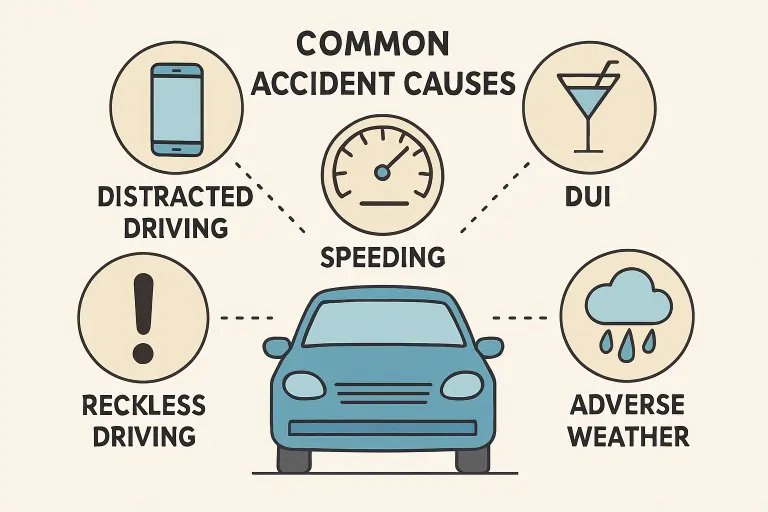
Key Takeaways
- Distracted driving is one of the most common causes of car accidents. Simple awareness and focus drastically reduce risks.
- Speeding decreases your ability to react to unexpected events. Obeying speed limits is a simple yet effective way to prevent accidents.
- Driving under the influence of alcohol or drugs puts everyone at risk and leads to severe legal and financial consequences.
- Reckless and aggressive driving behaviors compromise the safety of all road users. Patience and adherence to traffic laws are vital.
- Hazardous weather increases accident risk. Adjusting your driving style in poor weather conditions can prevent needless crashes.
Table of Contents
- Distracted Driving
- Speeding
- Driving Under the Influence
- Reckless Driving
- Adverse Weather Conditions
- Conclusion
Accidents remain a harsh reality on our roadways, often resulting in damaged vehicles, injuries, or even fatalities, and driving the need for personal injury claims. Whether you’re an everyday commuter or an occasional road tripper, understanding why these accidents happen is crucial to prevention. If you want to safeguard your well-being and legal rights after an incident, connect with a car accident lawyer Homestead who understands the complexities of traffic laws and claims. By recognizing and addressing these common causes, all drivers can contribute to fostering safer roads for everyone.
Every year, thousands of avoidable crashes alter the lives of drivers and passengers alike. The majority stem from a handful of recurring behaviors and circumstances, yet many of these can be mitigated through simple diligence and responsible decision-making. While the risks never entirely disappear, proactive steps and education reduce both the frequency and severity of collisions, ultimately saving lives and minimizing injuries.
At the heart of accident prevention is personal accountability. When you take steps to minimize distractions, obey speed limits, and adapt to changing weather conditions, you contribute to a safer community. Here, we examine the leading causes of accident claims, offer practical prevention tips, and share current statistics to showcase the urgency for change.
For more in-depth information on highway safety and regulations, consider reviewing recent data provided by the National Highway Traffic Safety Administration (NHTSA), which remains a reliable resource for drivers, policymakers, and legal professionals.
Distracted Driving
Distracted driving is one of the fastest-growing causes of car accidents across the U.S., fueled by the widespread use of smartphones and other electronic devices. Simple behaviors—like texting, setting a GPS, eating, or reaching for items in the car—may only take seconds but can have lifelong consequences. According to the NHTSA, distracted driving took the lives of 3,308 people in 2022 alone. Many states have significantly tightened enforcement on cellphone usage and other distractions behind the wheel, yet it remains a leading cause of claims and litigation. The key to prevention is to keep your full attention on the road and avoid multitasking while driving.
Speeding
Speeding continues to be a deadly factor in traffic accidents year after year. When you exceed speed limits, the time you have to recognize and respond to hazards is drastically reduced, and the energy involved in a crash dramatically increases, leading to more severe injuries or death. The NHTSA reported over 11,000 fatalities linked to speeding in 2023. To steer clear of contributing to these statistics, always drive at or below posted speed limits and slow down during adverse conditions or in high-traffic or construction zones. Speeding may save you a few minutes, but it can cost far more in the long run.
Driving Under the Influence
Alcohol or drug-impaired driving remains one of the most preventable causes of catastrophic accidents. In 2022, more than 13,500 lives were lost in crashes involving drivers under the influence. Impairment dulls your decision-making abilities and motor skills, making it four times more likely you’ll crash while driving. Selecting a designated driver, using rideshare apps, or taking public transportation are all easy alternatives to getting behind the wheel intoxicated. The penalties for DUI are severe, including license loss, heavy fines, and even jail, not to mention the devastating human costs.
Reckless Driving
Reckless and aggressive driving can take many forms, including tailgating, making rapid lane changes without signaling, street racing, and failing to yield the right of way. These behaviors put everyone at risk, not just the perpetrator. Annoyances like traffic congestion or running late can make drivers impatient, but impulsive reactions only accelerate the risk of serious, sometimes fatal, accidents. Practicing patience and remaining calm, even when provoked, helps prevent these avoidable tragedies. Reckless driving is a primary focus of law enforcement and is frequently cited in personal injury claim investigations.
Adverse Weather Conditions
Weather is a factor beyond any driver’s control, yet how you respond to it can make a significant impact. Rain can reduce visibility and cause hydroplaning, snow and ice can create treacherous surfaces, and fog can significantly limit your ability to see. In any of these scenarios, reduce your speed, increase your following distance, and make full use of your lights to be as visible as possible. Consult the Consumer Reports guide to bad weather driving for specific strategies that can help you adapt your driving in harsh conditions. Remember, the safest option during severe weather is often to delay or avoid travel if possible.
Conclusion
Car accidents are often the result of preventable actions and decisions. Staying committed to focused, responsible, and adaptive driving can help you avoid becoming a statistic or subject of an injury claim. By understanding these common causes—distracted driving, speeding, impairment, reckless habits, and adverse weather—you can contribute to safer roadways for yourself and others.
Small changes in behavior save lives and reduce legal headaches. Stay informed, educate those around you, and take all necessary precautions each time you get behind the wheel.
Read more: Moraine Lake Sunrise Tours vs. Day Tours: Which Should You Choose? – Blessingscore.com
The Hidden Benefits of Traditional Education You Might Not Know – Blessingscore.com
Understanding How Payment Processing Works for Businesses – Blessingscore.com