
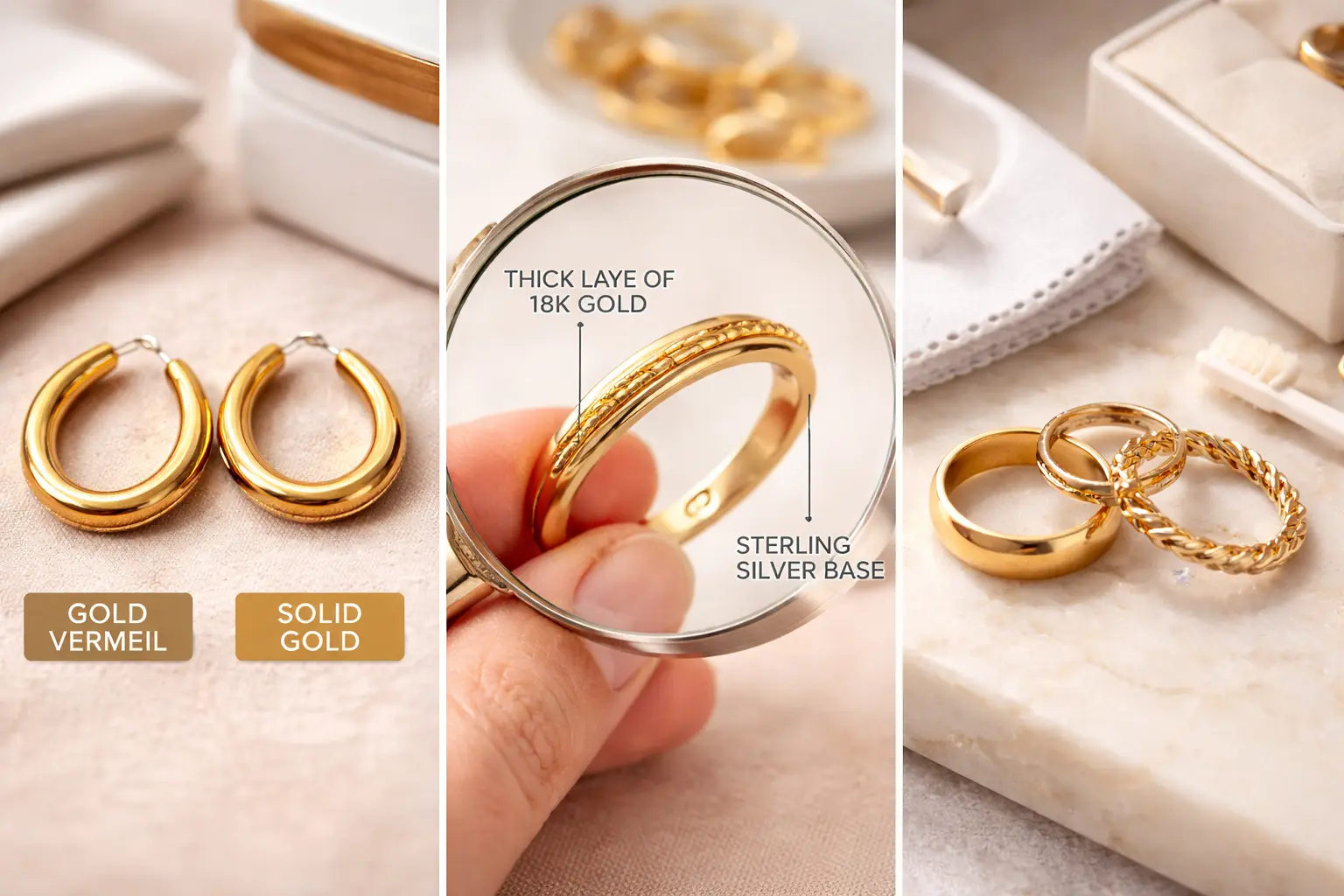
Buying jewelry often comes down to a balance between appearance, durability, and price. Two options that frequently come up are solid gold and gold vermeil jewelry. At first glance, they can look very similar, yet their construction, care needs, and long-term value are quite different. Understanding these differences can help you choose pieces that fit your lifestyle, budget, and expectations.
This comparison is not about which option is “better” overall. It’s about knowing what you’re paying for and how each type of jewelry performs over time.
What Is Solid Gold? A Clear Explanation
Solid gold jewelry is made entirely from a gold alloy. Pure gold is too soft for daily wear, so it is mixed with other metals such as copper or silver to improve strength. This is why solid gold pieces are marked with karats like 10K, 14K, or 18K.
The higher the karat, the more gold the piece contains. Solid gold does not wear away or expose a different base metal underneath. Even if it scratches or dulls over time, the material remains gold throughout.
This makes solid gold a long-term option, often chosen for engagement rings, wedding bands, and heirloom pieces meant to last for decades.
What Gold Vermeil Jewelry Is Made Of
Gold vermeil jewelry is constructed differently. It has a base of sterling silver that is coated with a thick layer of gold. To be classified as vermeil, the gold layer must meet specific thickness standards, and the base metal must be genuine silver.
This combination offers a solid feel and a richer look than standard gold-plated jewelry. The silver core adds weight and quality, while the gold layer provides the desired color and finish.
Gold vermeil is often used for fashion-forward designs and everyday pieces that offer a premium look without the cost of solid gold.
Appearance and Finish
Visually, gold vermeil and solid gold can be very close, especially when new. Both can have a warm, rich tone depending on the gold used. For most people, the difference is not obvious at first glance.
Over time, the appearance can change. Solid gold maintains its color, even as it develops minor scratches. Gold vermeil, on the other hand, may show signs of wear if the gold layer thins, especially in areas that rub against skin or clothing.
Proper care can extend the life of gold vermeil, but it will not age the same way solid gold does.
Durability and Daily Wear
Solid gold is known for its durability, particularly in lower karat options like 10K or 14K. These alloys are strong enough for daily use and less prone to bending or damage.
Gold vermeil is suitable for regular wear, but it requires more care. Exposure to moisture, friction, and chemicals can speed up wear on the gold layer. Rings and bracelets tend to show wear faster than earrings or necklaces because they come into contact with surfaces more often.
If you plan to wear a piece every day without much thought, solid gold may be the safer option.
Maintenance and Care
Caring for solid gold is relatively simple. Occasional cleaning and polishing are usually enough to keep it looking good. It does not require special storage beyond basic protection from scratches.
Gold vermeil requires a bit more attention. It should be removed before showering, swimming, or applying lotions and perfumes. Storing it separately from other jewelry can help prevent abrasion.
With proper care, gold vermeil jewelry can maintain its appearance for years, but it does demand more awareness from the wearer.
Price and Accessibility
Price is often the deciding factor between these two options. Solid gold is significantly more expensive due to its material content. The cost increases with higher karat levels and larger designs.
Gold vermeil offers a more accessible entry point. It allows buyers to enjoy the look of gold and quality craftsmanship at a lower price. This makes it appealing for trend-based designs, gift purchases, or building a varied jewelry collection without a large investment.
For many buyers, gold vermeil provides flexibility that solid gold cannot.
Long-Term Value
Solid gold retains intrinsic value. Even if a piece goes out of style, the gold content remains valuable and can be resold or melted down.
Gold vermeil does not have the same resale value. Its worth lies more in its design and wearability than in its materials. This does not make it a poor choice, but it is something to consider if long-term value matters to you.
Your expectations should match your reason for buying.
Skin Sensitivity Considerations
People with sensitive skin often pay close attention to jewelry materials. Solid gold, especially higher karat options, is generally safe for sensitive skin.
Gold vermeil uses sterling silver as its base, which is also considered skin-friendly for most wearers. However, once the gold layer wears down, the silver may be exposed, which can cause reactions for some individuals.
Choosing reputable manufacturers and caring for pieces properly helps reduce this risk.
Choosing What Fits Your Lifestyle
The best choice depends on how you plan to wear the jewelry. If you want a piece you can wear daily without concern, solid gold is a reliable option. If you enjoy rotating styles, following trends, or wearing statement pieces occasionally, gold vermeil offers flexibility and value.
Many buyers choose a mix of both. Solid gold for core pieces and gold vermeil for variety and expression.
Final Thoughts
Gold vermeil jewelry and solid gold serve different purposes. One offers lasting material value and minimal upkeep, while the other provides accessible luxury and design freedom. Neither option is automatically better—it comes down to how you wear your jewelry and what you expect from it.
By understanding construction, durability, care, and cost, you can make informed choices that suit both your style and your budget.
Also Read-Empowering Teens Through Residential Mental Health Treatment