
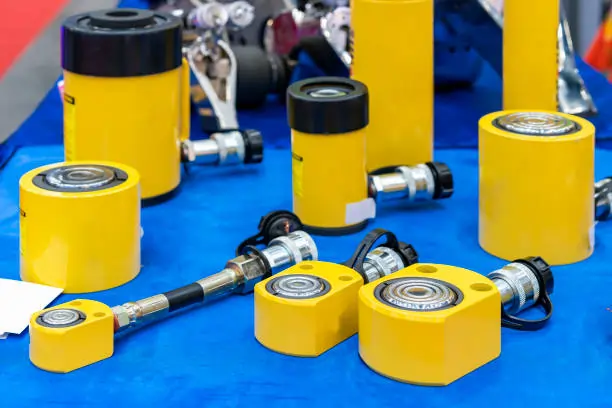
Hydraulic bolt tensioners are increasingly favored in critical industrial applications because they deliver a more consistent and reliable clamp load than traditional torque wrenches. Many systems require very precise bolt preload — especially in high-pressure, high-temperature, or safety-critical environments — and torque-based tightening often struggles to achieve uniform results due to friction losses, thread variability, and other uncertainties. Hydraulic tensioners bypass many of these issues by applying a purely axial tensile force directly to the bolt, resulting in a highly accurate and repeatable preload. We will explore why hydraulic bolt tensioners outperform torque wrenches in key areas, making them a superior choice for many bolting applications.
Key Advantages of Hydraulic Bolt Tensioners
- Superior Accuracy and Preload Control
Unlike torque wrenches that rely on rotation and are greatly affected by friction — under nut heads and along threads — hydraulic bolt tensioners apply axial stretch directly to the bolt, which gives far more precise control of the actual preload. Because the load is generated by hydraulic pressure, operators can calculate and control the exact elongation needed, ensuring consistent clamping force every time. TorqLite, for instance, states that their tensioners minimize friction losses and provide predictable residual load with great repeatability. This leads to far less variation between what you intend to apply and what the bolt actually carries, which is especially critical in flanged joints or assemblies that must maintain strong, even compression.
- Reduced Risk of Damage and Stress
When using a torque wrench, torque is transferred via rotational force, which can introduce torsional stress, bending, and even galling on threads — particularly for large or delicate bolts. Hydraulic tensioners avoid these issues entirely. Since the bolt is stretched rather than twisted, there is no residual shear or torsional stress once the joint is locked in place. Moreover, because there’s no need to overcome large frictional forces, the nuts don’t need to be aggressively turned into position under heavy torque, thereby minimizing wear and the risk of damaging threaded surfaces. This gentle and controlled tightening helps extend the life of fasteners and reduces maintenance costs.
- Improved Safety and Ease of Operation
Hydraulic tensioners can significantly reduce physical strain on workers. Instead of handling heavy torque tools and applying rotational force, operators can mount the tensioner components (bridge, puller, cylinder) and rely on high-pressure hydraulics to stretch the bolt. This method lowers the risk of injury from slipping wrenches or manual over‑tightening. Hydraulic tensioners also allow for the controlled application of load, minimizing sudden or unpredictable forces. In addition, TorqLite’s designs permit quick connection and disconnection, with components that are relatively lightweight compared to full torque wrench assemblies.
- Time Efficiency and Productivity
One of the major advantages of tensioning systems is their ability to work quickly, particularly when dealing with multiple bolts. With well-designed hydraulic systems, multiple tensioners can be operated in sequence or simultaneously, significantly reducing assembly time. According to Hydraulics Technology, using a tensioner setup with a 25 % cover (one tensioner per four studs) can reduce tightening time by approximately 50%. This speed benefit is particularly valuable on large flanged joints or complex assemblies where many bolts need to be tightened to high accuracy.
- Uniform Load Distribution
Because hydraulic tensioners stretch each bolt by a known, uniform amount, the resulting clamping force is very evenly distributed. Torque-based methods, in contrast, often produce uneven preload because friction can vary significantly between bolts. Differences in lubrication, thread condition, or surface finish result in a mismatch between how torque is converted into actual load. Hydraulic tensioning eliminates many of those variables, resulting in joint integrity that is reliable and predictable.
- Reduced Relaxation and Better Long-Term Stability
When bolts are torqued, the preload can relax over time, especially under cyclic loads, vibration, or settling. Studies have shown that bolts tensioned hydraulically tend to retain their preload better under cyclic loading than those torqued conventionally. Because the load is locked into the bolt via its elongation, less of the initial clamping force is lost, which contributes to long-term stability, especially in critical joints subjected to dynamic stresses.
- Scalability and Flexibility
Hydraulic tensioning tools, such as those from TorqLite, are available for a wide range of bolt sizes and flange types. Their tensioners support both imperial and metric fasteners, and their modular adapters make them compatible with various industrial standards (e.g., ANSI, MSS, API). This flexibility means that one toolset can cover a wide range of bolt applications, making tensioning systems cost-effective and adaptable.
- Predictable and Safe Load Release
The process of tensioning involves gradually releasing the hydraulic pressure once the nut is snug — transferring the load securely to the bolt and the joint. Because the system is designed to apply the correct preload and then maintain it, the risk of over‑tightening or under-tightening the nut is greatly reduced. TorqLite notes that their tensioners deliver about 20 % less load loss compared to friction-based torque methods.
Hydraulic bolt tensioners offer a range of advantages over torque wrenches, particularly when precision, safety, and reliability are paramount. They deliver higher accuracy by directly stretching the bolt, minimize the damaging effects of torsion, and lead to more uniform load distribution across a joint. Operators benefit from faster and safer operations, and components last longer due to reduced thread wear. For applications in sectors such as oil and gas, power generation, or other critical assemblies, tensioning provides a dependable method to ensure that bolted connections remain strong, stable, and consistent over time.
Read more: ADHD Therapy in Adolescents: Addressing Identity and Transition – Blessingscore.com
Choosing the Right Woodwind Instrument for Your Child – Blessingscore.com