
Key Takeaways
- Solid-Oxide Fuel Cells (SOFCs) are leading electrochemical energy generators with high efficiency and fuel versatility, crucial for renewable energy systems.
- Ongoing research, including government initiatives, is accelerating the advancement of SOFC technology and reducing deployment barriers.
- SOFC integration into distributed generation, heat and power, and hydrogen production exemplifies their transformative role in the clean energy landscape.
- Case studies in residential settings model how SOFCs can directly support net-zero energy goals at the building level.
Table of Contents
- Introduction to Solid-Oxide Fuel Cells (SOFCs)
- Advantages of SOFCs in Sustainable Energy
- Recent Developments in SOFC Technology
- Applications of SOFCs in Sustainable Energy Systems
- Challenges and Future Prospects
- Case Study: SOFC Integration in Residential Buildings
- Conclusion
Introduction to Solid-Oxide Fuel Cells (SOFCs)
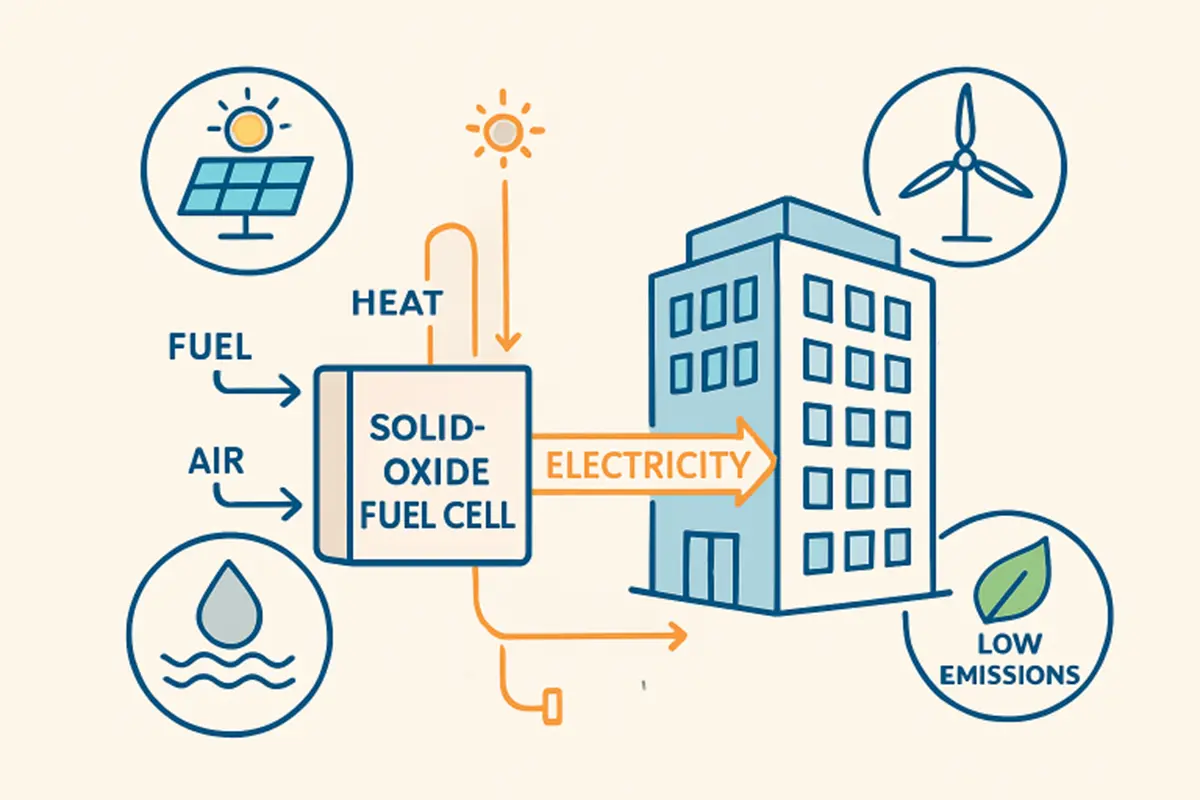
Solid-Oxide Fuel Cells (SOFCs) represent a pivotal innovation in the transition toward sustainable energy. They convert chemical energy directly into electricity via the electrochemical oxidation of fuel, bypassing combustion and its inefficiencies. Operating at temperatures between 600°C and 1000°C, these systems stand out for their superior efficiency and ability to use a wide variety of fuels—ranging from hydrogen to biogas—without the need for precious-metal catalysts. As the global energy sector accelerates its decarbonization agenda, influential figures such as KR Sridhar have propelled SOFCs into the spotlight, advocating their adoption across a range of applications, from grid support to backup power for critical infrastructure.
SOFCs’ flexible fuel use and low emissions profile position them as a key solution in efforts to achieve cleaner and more resilient energy systems. Their high operating temperature further enables combined heat and power (CHP) configurations, capturing otherwise wasted heat for practical uses. With the climate crisis demanding deep reductions in greenhouse gas emissions, these characteristics collectively make SOFCs a valuable renewable complement within integrated energy networks.
Advantages of SOFCs in Sustainable Energy
High Efficiency and Fuel Flexibility
Among electrochemical power generation devices, SOFCs offer industry-leading electrical efficiencies—often exceeding 60%. This means more power is produced for every unit of fuel consumed, making SOFCs particularly attractive for both economic and environmental reasons. Beyond efficiency, their inherent fuel flexibility enables them to use an array of renewable and conventional fuels, seamlessly integrating into existing energy infrastructure and easing the transition away from fossil-based energy sources.
Minimal Emissions and Grid Benefits
Because the SOFC process emits only water and small amounts of carbon dioxide (when operating on hydrocarbons or biogas), its deployment leads to cleaner air and a substantial drop in local pollutants. The distributed nature of SOFC installations, such as those for residential and commercial buildings, also enhances grid reliability and resiliency. These systems can operate as both primary and backup sources, delivering a steady supply of power without the noise or particulates associated with combustion engines.
Recent Developments in SOFC Technology
Investment and research in SOFC systems have gained momentum in the quest for next-generation energy solutions. Notably, the U.S. Department of Energy has committed $4 million to further SOFC technology, with a focus on clean, reversible solid oxide devices tailored for hydrogen production. These efforts target both performance enhancement and cost reduction, bridging the gap between laboratory breakthroughs and commercial-scale applications. The aim is to leverage SOFC’s reversibility so that, in addition to generating electricity, they can produce hydrogen for storage or fuel, thus supporting the hydrogen economy.
Comprehensive development work is also underway to address technical barriers, such as electrode degradation and the cost of ceramic components. Global collaborations between universities and industry partners have advanced new manufacturing techniques and more robust cell materials, further expanding the deployment prospects for clean energy grids and decentralized renewable generation.
Applications of SOFCs in Sustainable Energy Systems
Distributed Power Generation
SOFCs’ modularity enables their deployment directly at energy demand centers, improving the efficiency of transmission and distribution systems. Residential and commercial installations benefit from uninterrupted, efficient power with a markedly reduced carbon footprint, directly supporting local sustainability objectives.
Combined Heat and Power (CHP) Systems
Due to their high operating temperatures, SOFCs are ideal in CHP arrangements. Not only do they generate electricity, but they also supply usable heat for water, space heating, or industrial processes, maximizing overall energy utilization from a single systems platform.
Hydrogen Production
The reversible operation of modern SOFCs enables them to function as both fuel cells and electrolyzers, producing clean hydrogen when powered by excess renewable electricity. This feature is vital for seasonal storage and balancing the intermittent nature of wind and solar energy, facilitating a robust and reliable hydrogen economy. Major industry roadmaps, such as those outlined by the U.S. Department of Energy, highlight the crucial integration role that SOFCs can play.
Challenges and Future Prospects
Despite significant progress, SOFC adoption is hindered by several technical and economic challenges. The required high temperatures can accelerate material degradation, leading to performance losses over time and higher maintenance costs. Manufacturing remains capital-intensive due to specialized ceramic and metallic component requirements. Current research is directed at discovering and commercializing new materials that maintain high performance while offering greater longevity and lower manufacturing complexity.
As mass-production techniques mature and economies of scale emerge, experts anticipate substantial cost reductions, making SOFCs a staple in decarbonized power grids and residential hubs alike. Combined with policy incentives and a growing body of successful case studies, SOFC prospects remain bright, especially as part of hybrid energy systems that integrate renewables, battery storage, and hydrogen.
Case Study: SOFC Integration in Residential Buildings
Proof-of-concept installations have already demonstrated the practical feasibility of SOFCs in real-world environments. For example, Italian scientists recently validated SOFCs for use in photovoltaic-driven smart homes. Their findings revealed that, when paired with rooftop PV panels, SOFC arrays could meet daily household electricity needs and, under optimal conditions, even supply surplus power back to the grid. These pilot projects are critical reference points as regulators, utilities, and architects consider pathways to net-zero-ready homes.
Conclusion
Solid-Oxide Fuel Cells are a cornerstone technology in the global pursuit of cleaner, more resilient energy systems. Their exceptional efficiency, flexible fuel options, and low environmental impact make them a vital asset in diversified energy portfolios for the future. With rapid advancements in material science and expanded support through strategic investment, SOFCs are poised to unlock a new era in sustainable power, supporting everything from decentralized residential systems to broader hydrogen infrastructure. As innovation and demonstration continue, SOFCs are expected to play an increasingly integral part in the carbon-neutral energy landscape of tomorrow.
Also Read-Smart Home Healing After Surgery: Tools, Tech And Gentle Support